
Whoa! That sudden jolt when a transfer doesn’t show up still gives me a mini heart attack. My instinct said something felt off about the UI at first, but then I dug in and realized the explorer was just telling a story I hadn’t learned to read. At first glance a transaction hash is just a long string; but when you decode it, you get a timeline, accounts involved, program calls, and sometimes the little errors that explain why funds didn’t move. I’m biased, but once you know the signs, you stop panicking and start troubleshooting like a pro.
Seriously? Yeah — it sounds dramatic. Solana moves fast, and that speed creates patterns that feel unfamiliar. When a slot finalizes in under a second, confirmations pile up quick. On one hand that speed is awesome for UX; on the other, it means you miss nuance unless you use the right tool.
Here’s the thing. A block explorer isn’t just a receipt. It’s a forensic kit. You can search by signature, wallet address, program ID, or token mint. With those searches you can reconstruct transfers, check inner instructions, and see program logs that often reveal why a transaction failed or why an NFT mint barely clipped through. My first time tracing a failed swap I thought the DEX was at fault — actually, wait—let me rephrase that: I thought the DEX was at fault until I read the log showing a slippage fail, and then I felt a little dumb. But that’s how you learn.
Short tip: copy the signature. Paste it. Hit enter. The simplest action is often the only action you need. The explorer shows signature status, slot, and block time right away. Then you can expand to the details and see the instruction list, accounts touched, and any returned errors — which are gold when you’re debugging.
Why Solscan Feels Different
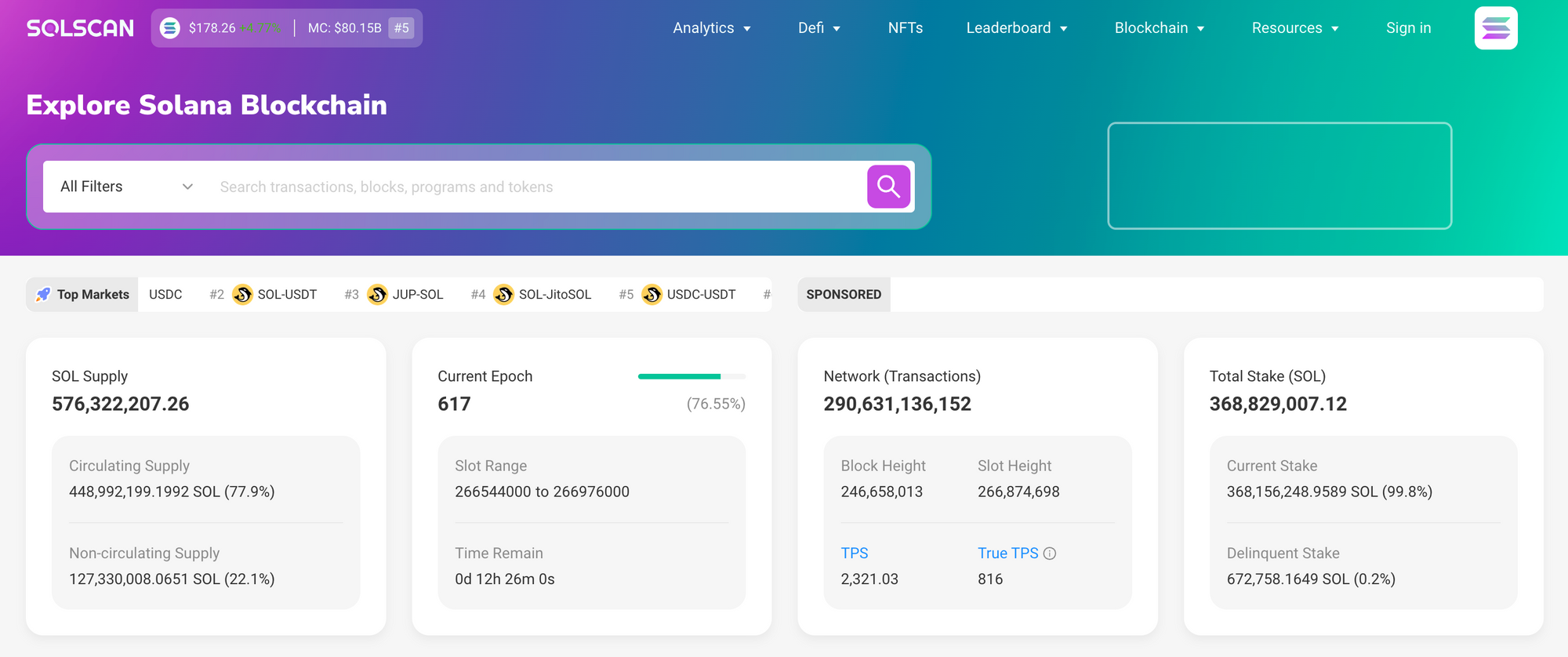
Okay, so check this out—Solscan layers contextual cues on top of raw data. It surfaces token balances, NFT metadata, and even program verification status without making you hunt for somethin‘ hidden in menus. The UI gives you tabs for transactions, tokens, and activity; the logs are collapsible; and inner instructions are shown inline so you can trace a complex swap across multiple programs. For me that made the difference between guessing and understanding.
At a technical level Solscan parses inner instructions and decodes common program instructions so you don’t have to translate base64 by hand. When you’re dealing with cross-program invocations, seeing which program invoked which other program — and with what accounts — saves hours. On a practical level, that meant I could tell whether a wallet actually signed a transaction or whether a temporary relay service did it, which matters a lot for trust and forensics.
Initially I thought all explorers were interchangeable, though actually there are meaningful trade-offs. Some explorers prioritize raw protocol data and minimal UI. Others, like the one I lean on, prioritize decoded instruction context and token metadata. If you care about NFTs, token holders, and human-readable program names, that context reduces ambiguity. Sometimes the difference is subtle; sometimes it prevents a very bad mistake.
Practical trick: if you’re chasing a stuck SOL transfer, check the confirmation status and recent block time first. Then look at the fee payer and preflight simulation result. If the preflight failed, the explorer will usually show the error code in the logs. If the transaction was simulated but not submitted, that tells you the source of the failure immediately. These are simple diagnostics that save a lot of head-scratching.
Hmm… authentication matters too. I’m not 100% sure every third-party site is trustworthy, so I always cross-check program IDs and contract addresses. If a project links an explorer page, verify the program ID yourself by searching it in the explorer. Phishing pages sometimes paste screenshots, but the live explorer shows real-time changes and is harder to fake. Use that to your advantage.
Something that bugs me: people often confuse signature and transaction status. They’re related but different. A confirmed signature means the network recorded the transaction hash; finalized means it reached the highest level of consensus for that cluster. With Solana’s block finality model, finality comes fast but you should still check which confirmation level is shown. For very large transfers, wait for finality. For small NFT ops, confirmed may be fine depending on your risk tolerance.
I’m not 100% sure about every edge case — I’m still learning some low-level programmatic quirks — but here’s a list of things I routinely check in Solscan when tracing a transaction: signature, slot, block time, fee payer, preflight simulation status, instruction list, inner instructions, token transfers, token balances before/after, and program logs. That list handles most puzzles I encounter.
How to Use the solscan explorer official site for Everyday Troubleshooting
Start simple: paste the signature into the search bar. If you’re investigating a wallet, paste the address. Use cluster toggles for mainnet-beta, testnet, or devnet — bad conclusions happen when you’re looking at the wrong cluster. Check the tokens tab for balance deltas and the transactions tab for recent activity. If you see a failed transaction, expand the log and read the last few lines; often they say exactly why the instruction returned an error.
Another helpful habit: when interacting with a new program, look up its program ID in the explorer and see the recent activity. Are there many calls? Who are the frequent callers? That social graph gives context — is the program actively used, or does it look abandoned and risky? The answer shapes whether I risk interacting with it.
Frequently Asked Questions
Q: How do I find a transaction by signature?
A: Paste the signature into the top search bar and hit enter. You’ll get status, slot, block time, instructions, and logs. If nothing appears, check the cluster selector — you might be on testnet when the transaction was on mainnet-beta.
Q: What does a failed transaction log tell me?
A: It usually contains an error code or a human-readable error from the invoked program. Look at the last few log lines and the inner instructions; they often show which program returned the error and why. That info tells you whether to retry, change slippage, or contact the dApp team.